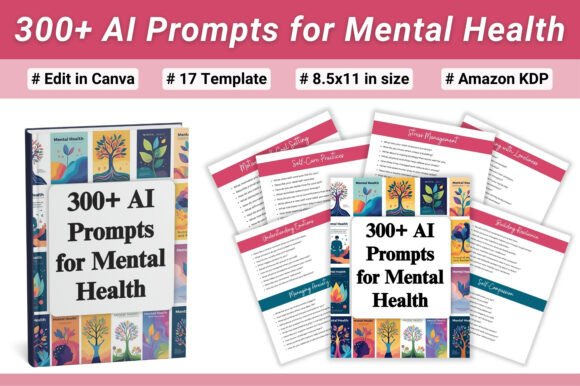
300 AI Prompts for Mental Health: A Guide to Navigating Wellness with Purpose
In today’s fast-paced world, mental health has become a critical focus for individuals seeking balance and clarity. 300 AI Prompts for Mental Health is a resource designed to support emotional awareness, resilience, and self-care through thoughtfully crafted prompts that integrate AI-inspired insights. Whether you're journaling, exploring therapy, or engaging in self-reflection, this guide offers a versatile tool to enhance your mental wellness journey.
What Is 300 AI Prompts for Mental Health?
300 AI Prompts for Mental Health is a collection of over 300 prompts tailored to help users explore emotions, build coping strategies, and cultivate mindfulness. These prompts are structured around key areas such as emotional awareness, resilience, self-compassion, and healthy relationships. The integration of AI technology allows for personalized insights and adaptive reflection, making it a valuable tool for both beginners and experienced practitioners.
The prompts are designed for use in various settings—daily journaling, therapy sessions, coaching workshops, or even as part of a personal development routine. With options for print and digital download, the guide is accessible and convenient for users who want to incorporate mental wellness into their daily lives.
Common Mistakes When Using 300 AI Prompts for Mental Health
While 300 AI Prompts for Mental Health can be incredibly beneficial, there are several common mistakes people make when choosing, using, or applying these prompts. Understanding these pitfalls can help you maximize the value of this resource.
- Using prompts without intention: One of the most frequent errors is approaching the prompts without a clear purpose. Simply listing thoughts without direction can lead to superficial reflections rather than meaningful insights.
- Overlooking the context: Not all prompts are suitable for every situation. For example, a prompt focused on resilience might not be appropriate during a period of intense emotional distress.
- Ignoring the format: Some users may skip the structured format, which is designed to guide deeper exploration. This can reduce the effectiveness of the prompts and limit their impact.
- Not checking compatibility: If you're using the prompts in a professional setting, such as therapy or coaching, it's important to ensure they align with ethical guidelines and therapeutic approaches.
- Underestimating the need for customization: While the prompts are general, they may not always fit individual needs. Customizing them based on personal experiences can significantly enhance their relevance and effectiveness.
How These Mistakes Can Affect Your Experience
Mistakes in using 300 AI Prompts for Mental Health can have several negative consequences. Without intention, the prompts may fail to address underlying issues, leading to frustration and disengagement. Ignoring context can result in inappropriate responses or emotional discomfort. Poor formatting can reduce the clarity and depth of reflections, while a lack of customization may make the prompts feel irrelevant or unhelpful.
Additionally, not considering compatibility can raise ethical concerns, especially in professional settings. Failing to adapt the prompts to individual needs may also prevent users from fully benefiting from the resource, ultimately reducing its impact on mental wellness.
Practical Advice for Better Use
To avoid these pitfalls, consider the following strategies:
- Set a clear intention: Before using any prompt, define what you hope to achieve. Are you looking to process a specific emotion, build resilience, or improve communication? Having a goal in mind ensures your reflections are meaningful.
- Choose the right context: Match the prompt to your current emotional state and goals. For instance, use prompts focused on self-compassion during moments of self-criticism.
- Follow the structure: Take time to engage with each prompt fully. Allow yourself to reflect, write, or meditate on the question before moving on to the next one.
- Customize as needed: Adjust prompts to better suit your personal experiences. For example, if a prompt about boundaries feels too generic, rephrase it to reflect your specific situation.
- Check compatibility: If using the prompts in a professional setting, ensure they align with your ethical standards and therapeutic approach. Consult with colleagues or mentors if unsure.
What to Check Before Using 300 AI Prompts for Mental Health
Before deciding to use 300 AI Prompts for Mental Health, consider the following factors:
- Relevance: Does the resource align with your specific mental health goals? Are the prompts designed for your intended use case (e.g., journaling, therapy, self-exploration)?
- Quality: Are the prompts well-crafted, diverse, and easy to understand? Look for variety in topics and formats to ensure comprehensive coverage.
- Accessibility: Is the resource available in formats that suit your preferences (print or digital)? Consider whether you need instant access or a downloadable version.
- Support: Does the provider offer additional resources, such as guides, examples, or community support? This can enhance your overall experience and understanding.
- Cost: Evaluate whether the price is justified by the value provided. Compare with similar resources to ensure you’re getting a fair deal.
Conclusion
Using 300 AI Prompts for Mental Health can be a powerful way to support your emotional well-being. By avoiding common mistakes and following practical advice, you can maximize the benefits of this resource. Remember to approach the prompts with intention, context, and customization to ensure they serve your unique needs. With thoughtful application, these prompts can help you navigate challenges, cultivate hope, and build healthier habits for lasting mental wellness.