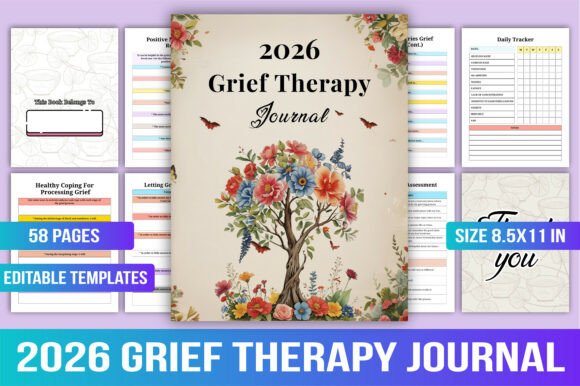
2026 Grief Therapy Journal: A Thoughtful Tool for Navigating Loss
The 2026 Grief Therapy Journal is more than just a notebook—it’s a structured, compassionate companion designed to support individuals through the complex and often overwhelming journey of grief. Whether you are coping with the loss of a loved one, navigating a major life transition, or simply seeking tools to process emotional pain, this journal offers a unique blend of reflection, organization, and self-care. Its thoughtful design caters to those who value intentional practices and seek meaningful ways to honor memories while moving toward healing.
A Structured Approach to Emotional Healing
Grief is not a linear process, but the 2026 Grief Therapy Journal acknowledges this complexity by providing a flexible yet guided framework. The inclusion of a weekly planner with built-in dated sections allows users to integrate their healing journey into daily routines without feeling overwhelmed. This structure is particularly beneficial for professionals and busy individuals who may struggle to find dedicated time for emotional processing.
One of the standout features of the journal is its collection of grief recovery prompts. These prompts encourage users to reflect on their loss in a safe, nonjudgmental space. By writing about unsaid thoughts, honoring memories, and finding peace, individuals can begin to untangle emotions that might otherwise remain unresolved. For example, a prompt asking, “What would you like to say to your loved one now?” can help facilitate closure and emotional release.
Tracking Well-Being Through Daily Reflections
The journal also includes tools for monitoring emotional well-being, such as mood tracking logs and habit trackers. These features are essential for anyone looking to understand their emotional patterns over time. The integration of icons like 🌙 Mood Tracker and 🧴 Self-Care makes it easy to identify triggers and build healthier routines.
For instance, a user might track their hydration intake using the 💧 icon and notice a correlation between physical health and emotional stability. Similarly, the sleep tracker can help individuals recognize how rest affects their ability to cope with grief. These practical insights make the journal not only a tool for reflection but also a resource for proactive self-care.
Preserving Memories and Creating Rituals
A key aspect of the 2026 Grief Therapy Journal is its focus on preserving cherished memories. The memory pages allow users to write letters, document moments of joy, and even create rituals that honor their loved ones. This feature is especially valuable for those who find comfort in maintaining connections with those they have lost.
For example, a person might use the journal to write a letter to a deceased parent, expressing gratitude and sharing stories from their life. This act of writing can serve as both a therapeutic exercise and a way to keep the memory alive. The journal’s emphasis on ritual creation—such as letting go exercises—provides a sense of closure and purpose during a difficult time.
Measuring Progress and Embracing Growth
The inclusion of grief recovery assessments is another strength of the journal. These assessments allow users to check in on their progress and emotional state, offering a sense of direction and accountability. The use of icons like ✅ Checklist and 📊 Progress helps users visualize their journey and celebrate small victories along the way.
For someone who has recently experienced a significant loss, these assessments can provide reassurance that healing is possible. They also encourage a mindset of growth rather than stagnation, helping users see grief not as an obstacle but as a part of the human experience.
Quality and Usability Considerations
The quality of the 2026 Grief Therapy Journal is evident in its thoughtful layout and clear organization. The paper is sturdy and the ink flows smoothly, making it suitable for both daily use and long-term storage. The design is clean and uncluttered, which enhances readability and reduces cognitive load—a critical factor for those navigating emotional distress.
However, the journal’s effectiveness depends on the user’s willingness to engage with its prompts and tools. While the structure is supportive, it requires active participation. For individuals who prefer a more passive approach to healing, the journal may feel too prescriptive. That said, for those who benefit from structured guidance, it serves as an excellent resource.
Who Benefits Most From the 2026 Grief Therapy Journal?
The journal is ideal for adults aged 20–50 who are seeking a holistic approach to managing grief. It is particularly suited for professionals, entrepreneurs, and creatives who may experience loss as part of their personal or professional lives. Its practical nature aligns well with the lifestyles of those who value efficiency and intentionality.
Additionally, educators and small business owners may find the journal useful for supporting clients or team members dealing with emotional challenges. The journal’s emphasis on self-awareness and reflection makes it a versatile tool for both personal and professional settings.
Realistic Examples of Use
Consider a freelance writer who has recently lost a close friend. Using the journal, they might set aside time each morning to reflect on their feelings, track their mood, and write about shared memories. Over time, this practice could help them process their grief and regain a sense of purpose.
Another example is a small business owner who uses the journal to manage the emotional impact of a family loss while maintaining their professional responsibilities. The structured prompts and habit trackers can help them balance personal and work life without sacrificing their well-being.
Limitations and Final Thoughts
While the 2026 Grief Therapy Journal is a well-designed tool, it is not a substitute for professional therapy. Those experiencing severe or prolonged grief should seek guidance from licensed mental health professionals. Additionally, the journal may not be sufficient for individuals who require more intensive or specialized care.
Despite these limitations, the journal remains a valuable resource for many. Its combination of structure, reflection, and self-care makes it a compelling choice for those looking to navigate grief with compassion and intention. Whether used as a standalone tool or in conjunction with other support systems, the 2026 Grief Therapy Journal offers a meaningful way to honor loss and move toward healing.